
Puerto Plata City Guide: Victorian Streets, Fort and Cable Car
The old town of Puerto Plata in one well-planned day: Victorian houses, a sea fortress, a cable car up the mountain and the local crafts worth a look.
In this article
Puerto Plata’s historic center is compact enough to explore in a few hours, and it packs in a lot: pastel Victorian houses around Parque Central, a Spanish fortress facing the Atlantic, a cable car to the top of Mount Isabel de Torres, and shops selling amber, rum and hand-rolled cigars. If you have one day, or one port call, this is how to see the best of it without rushing.
A quick sense of the city
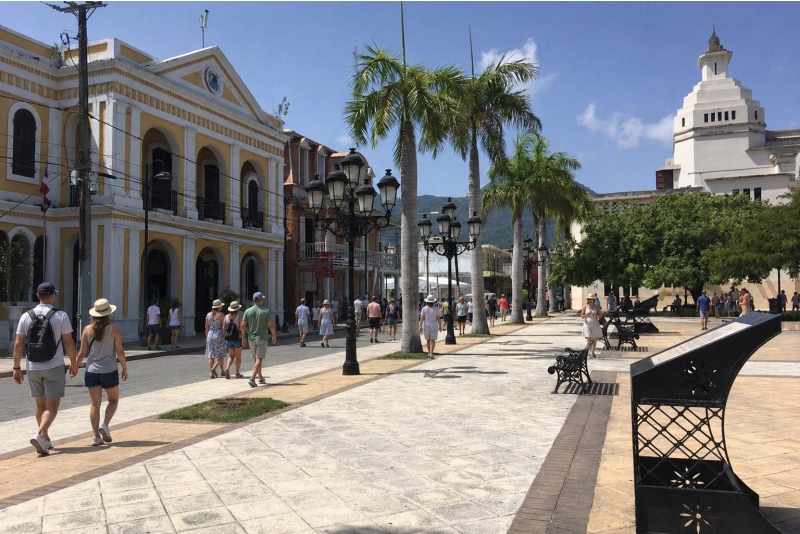
Puerto Plata is one of the oldest European-founded towns in the Americas, dating back to the early 1500s. Its look today owes much to the late 1800s and early 1900s, when tobacco and sugar money paid for wooden mansions with balconies, fretwork and tall shuttered windows. Many of those houses survive in the streets around the central park, some restored and brightly painted, others quietly aging.
It is a working city, not a museum. Motoconchos weave through traffic, vendors sell fruit from carts, and families fill the Malecón seafront in the evening. Walking is the best way to feel that rhythm, with a vehicle on hand for the longer hops.
Parque Central and the Victorian center
Start at Parque Central, officially Parque Independencia, the heart of the old town. Its white two-story gazebo is the city’s best-known image and a favorite photo stop. Across the square stands the Cathedral of San Felipe Apóstol, whose clean lines contrast with the ornate houses around it.
From the park, wander a few blocks in any direction to find the Victorian architecture. Look up at the balconies and the carved wooden details under the eaves. Some buildings now house cafés, shops and small cultural spaces, so it is easy to duck inside for a cold drink or a look around.
- Best time: early morning, before the heat and the busiest traffic.
- Respect: many houses are private homes. Photograph from the street and keep doorways clear.
- Dress: light clothes and shoulders covered if you want to step inside the cathedral.

Fortaleza San Felipe and the Malecón
A short drive or a longer walk from the center, Fortaleza San Felipe guards the entrance to the harbor. Built by the Spanish in the 16th century to protect the port from pirates and rival powers, it is a sturdy stone fort with thick walls, a moat and views straight out to sea. Inside, a small museum displays objects from its long history. Opening hours and entry fees can change, so check on the day.
Next to the fort begins the Malecón, the seafront promenade that runs along the city’s coastline. It is breezy, open and a good place to stretch your legs, especially late in the afternoon. The fortress area is also close to the Taino Bay cruise terminal, which makes it an easy first stop for passengers arriving there; our Taino Bay port guide covers what else is within reach.
The Isabel de Torres cable car
The teleférico climbs from the edge of the city to the summit of Mount Isabel de Torres, which rises steeply behind Puerto Plata. The ride itself is a highlight, with the town, the harbor and the coastline spreading out below you as the cabin climbs.
At the top you will find a botanical garden with walking paths, viewpoints and a large statue of Christ with open arms. The summit is often cooler than the coast, and clouds can roll in quickly, which sometimes hides the view and sometimes makes it dramatic.
- Go early for the clearest skies and shorter lines.
- Check before you go: the cable car can pause for strong wind, bad weather or maintenance.
- Bring a light layer and comfortable shoes for the gardens.
If the cable car is not running, the city center and the fort easily fill your time instead.
Umbrella Street, amber and local crafts
Calle de las Sombrillas
Umbrella Street is a short pedestrian stretch in the center covered by a canopy of colorful umbrellas. It is cheerful, very photogenic and lined with small shops and cafés. Visit early if you want photos without crowds.
Amber
The north of the Dominican Republic is known for its amber, fossilized tree resin that sometimes holds tiny insects or leaves from millions of years ago. The Amber Museum, in a historic house in the center, explains how it forms and shows remarkable pieces. Shops nearby sell jewelry in amber and in larimar, the blue stone found only in the Dominican Republic. Buy from established stores and ask for a certificate of authenticity on larger purchases.
Rum and cigars
Many city tours include a stop where you can taste Dominican rum and watch cigars being rolled by hand. Tastings are short and fun, and there is no obligation to buy. If you do, keep your airline or cruise line’s rules on alcohol and tobacco in mind before you shop.
Putting it together in one day
A comfortable plan for a full day or a long port call:
- Morning: cable car to Isabel de Torres while the sky is clear.
- Late morning: Parque Central, the cathedral and the Victorian streets.
- Lunch: local food near the center. See our Puerto Plata food guide for dishes to try.
- Afternoon: Umbrella Street, the amber museum, a rum and cigar stop, then Fortaleza San Felipe and the Malecón.
A guided Puerto Plata city tour handles the driving and the order of stops, which matters on hot days and tight schedules. Graceland Tours plans the route around your all-aboard time if you arrive by ship, and the city also pairs well with a beach or with the waterfalls if you want a mixed day.
Frequently asked questions
Can I explore Puerto Plata city on my own?
The center around Parque Central is walkable. The cable car and the fortress are farther apart, so most visitors use a guide or a taxi for those legs. Agree on taxi fares before you get in.
Is one day enough for the city?
One day, or a well-planned half day, covers the main sights. Stay longer if you want to linger on the mountain or explore the Malecón at sunset.
Is the city tour suitable for cruise passengers?
Yes. It is one of the easiest outings from both ports. Always confirm your return-to-ship time and leave a buffer for traffic.
Keep reading
All articles
Amber Cove Cruise Port Guide: How to Spend Your Day Ashore
What is inside Amber Cove, how much you can realistically fit into one port day, and how to…
Damajagua Waterfalls: A First-Timer and Family Guide
Jumping, sliding and swimming through the 27 Charcos of Damajagua: what really happens on the visit and how…

Taino Bay Cruise Port Guide: Puerto Plata from the City Harbor
Taino Bay puts your ship in Puerto Plata's own harbor. Here is what is inside the terminal, what…